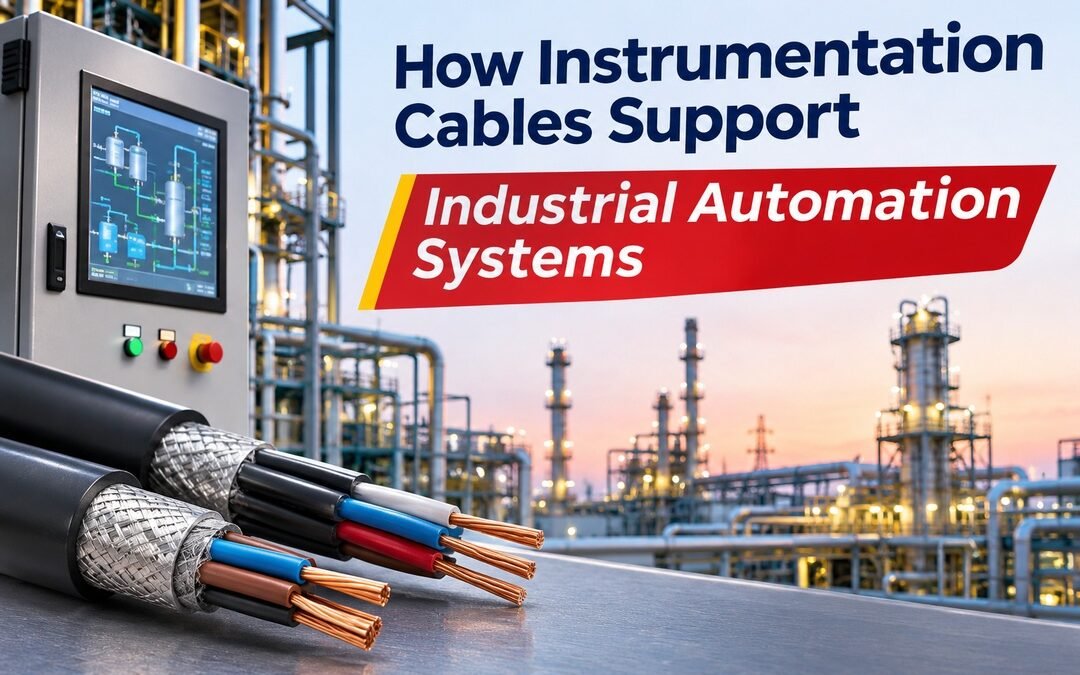
Industrial automation depends on accurate communication between machines, sensors, controllers, and monitoring equipment. Even a small interruption in signal transmission can affect production quality, equipment performance, and operational safety. This is where instrumentation cables play an important role. Designed to transmit low-voltage signals with reliability and minimal interference, these cables help industrial systems function smoothly. From manufacturing facilities and power plants to oil and gas installations, they support the continuous exchange of information between different components. Businesses looking for dependable electrical cables and wires in Dubai should understand the importance of selecting suitable cables for their automation requirements. Acrab Cab offers cable solutions for industrial applications where consistent signal transmission and dependable electrical connections are essential.
Reliable Signal Transmission for Automated Operations
Instrumentation cables carry signals between field instruments and control systems. These signals communicate important operating information, including temperature, pressure, flow, and liquid levels.
For example, in a manufacturing plant, temperature sensors send readings to a programmable logic controller (PLC). The controller processes this information and adjusts the equipment according to programmed instructions.
Reliable instrumentation cables help ensure that these signals reach their destination accurately, allowing automated processes to operate with greater consistency.
Protection Against Electrical Noise and Interference
Industrial environments contain motors, transformers, generators, and other equipment that can create electromagnetic interference (EMI). Such interference may disturb sensitive signals and lead to incorrect readings.
Instrumentation cables are designed with suitable shielding to reduce the impact of external electrical noise.
Common shielding options include:
- Individual shielding: Protects individual signal pairs from interference.
- Overall shielding: Provides protection across multiple cable pairs.
- Twisted pairs: Help minimise noise pickup during signal transmission.
Selecting appropriate cable construction is particularly important in facilities where sensitive monitoring equipment operates near heavy electrical machinery.
Supporting Communication Between Industrial Equipment
Automation systems involve several interconnected devices that need to exchange information continuously. Instrumentation cables establish communication links between sensors, transmitters, control panels, and monitoring systems.
Their applications include:
- Manufacturing and processing plants.
- Oil and gas facilities.
- Power generation stations.
- Water treatment plants.
- Chemical and pharmaceutical industries.
Reliable cable connections allow operators to monitor equipment conditions, identify irregularities, and make timely adjustments.
Essential Features of Industrial Instrumentation Cables
The performance of an instrumentation cable depends on its construction and suitability for the installation environment.
Cable Feature | Industrial Importance |
Shielding | Reduces electromagnetic interference |
Insulation | Protects conductors and maintains electrical separation |
Conductor quality | Supports consistent signal transmission |
Outer sheath | Provides protection against environmental conditions |
Temperature rating | Determines suitability for operating temperatures |
Businesses comparing electrical cable suppliers in Dubai should evaluate these technical specifications instead of selecting cables based on price alone.
Choosing the Right Cable Supplier for Industrial Projects
Selecting a dependable supplier is important for maintaining the quality and reliability of industrial installations. Buyers should consider product specifications, manufacturing standards, material quality, and application requirements.
When comparing wire and cable manufacturers in Dubai, consider the following factors:
- Availability of suitable instrumentation cable types.
- Compliance with relevant industry standards.
- Quality assurance and testing procedures.
- Technical documentation and product specifications.
- Consistent supply and customer support.
Acrab Cab focuses on cable solutions for different electrical and industrial requirements. Businesses searching for telecom wires and cables in Dubai or electrical cable suppliers in UAE should also evaluate whether the available products meet their specific installation and performance needs.
Conclusion
Instrumentation cables are an important part of industrial automation because they support accurate signal transmission, reduce electrical interference, and connect essential monitoring and control equipment. Choosing the right cable construction can improve system reliability and support smoother industrial operations. For businesses exploring electrical and communication cable solutions, Acrab Cab is a name to consider when evaluating product requirements and suitable cable options.
Looking for dependable cable solutions for your industrial project? Connect with Acrab Cab to discuss your requirements and explore suitable options for your application.
Frequently Asked Questions
1. What is the main purpose of instrumentation cables?
Instrumentation cables transmit low-voltage signals between sensors, transmitters, controllers, and monitoring equipment. They help industrial automation systems receive accurate information for controlling and monitoring different processes.
2. How do instrumentation cables reduce signal interference?
Many instrumentation cables use individual or overall shielding, along with twisted-pair construction. These features help minimise electromagnetic interference and maintain signal quality in electrically noisy industrial environments.
3. Where are instrumentation cables commonly used?
They are widely used in manufacturing plants, oil and gas facilities, power stations, chemical industries, and water treatment plants where accurate monitoring and process control are necessary.
4. What should businesses check before purchasing instrumentation cables?
Businesses should examine conductor material, insulation, shielding, sheath quality, temperature ratings, and applicable industry standards. Cable specifications should match the electrical and environmental requirements of the installation.
5. Why is choosing the right cable supplier important?
A reliable supplier can help businesses access suitable cable specifications, quality documentation, and consistent product supply. This supports better installation planning and helps avoid compatibility and performance issues.